Intercom is huge, Drift is revolutionary, and Zendesk is powerful. Surely, you’ve heard about these tools that worth millions of dollars, and for sure, you’ve probably interacted with at least one of them, or you took them into account while deciding which one will be the best fit for your business.
Without any doubts, Intercom, Drift, and Zendesk have a significant impact on the technology industry, but let’s not forget that, besides their strong position, these three brands are competing on the digital stage.
Let’s break down Intercom, Drift, and Zendesks’ marketing strategies and see examples of how they build their online presence. Also, we’ll analyze, which are the marketing moves that transform these software tools in successful brands, and how they manage to personalize their messages to differentiate their brands from the competition.
We’ll look into their website, Social Media posts, Newsletters to get insights on how Intercom, Drift, and Zendesk craft their content marketing strategies? How active are they on Social Media? Which type of content are they delivering? How do they engage with the audience? In brief, what Intercom, Drift, and Zendesk do to solidify their positioning on the market, and how do they differentiate from competitors?
Intercom, Drift and Zendesk Strategies On Website
Gathering website data of brands or competitors can be a challenge, especially when done it manually. Finding an easy and automatic way of monitoring and capturing websites’ info in a single place can bring valuable insights into brands’ marketing strategies and spot essential changes in pricing, CTA buttons, new language support – key details that can change the path of a business.
Zendesk Events & Meet Ups Agenda
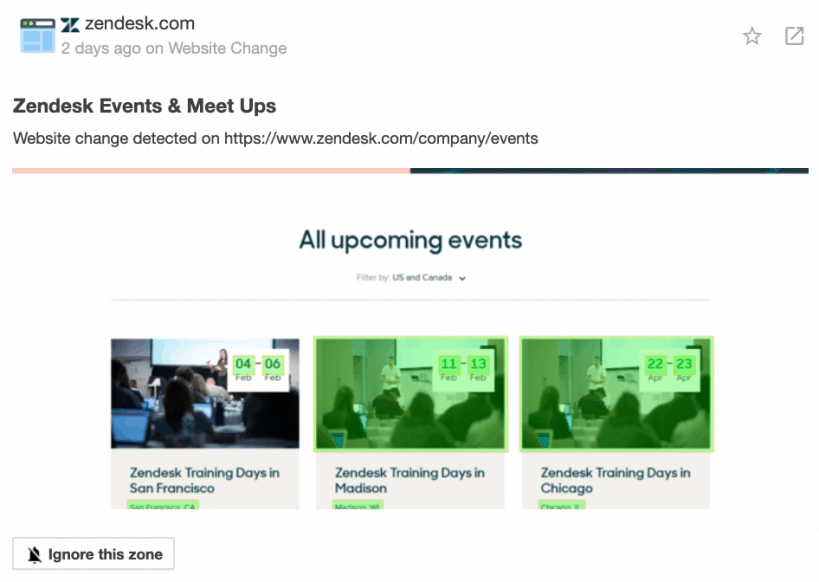
Analyzing the three websites in a single place, I’ve noticed that Zendesk has an Event Agenda on its website, taking the marketing strategies offline by creating meetups and events around the world. On the other site, Drift has created a whole section of reviews called “What Customers Love About Drift,” in which they imported customers’ opinions mainly written on Twitter.
Also, on the review dedicated page, Drift has changed the background of the button “Get a demo”, making it more easy to notice.
Drift Customers Reviews Page
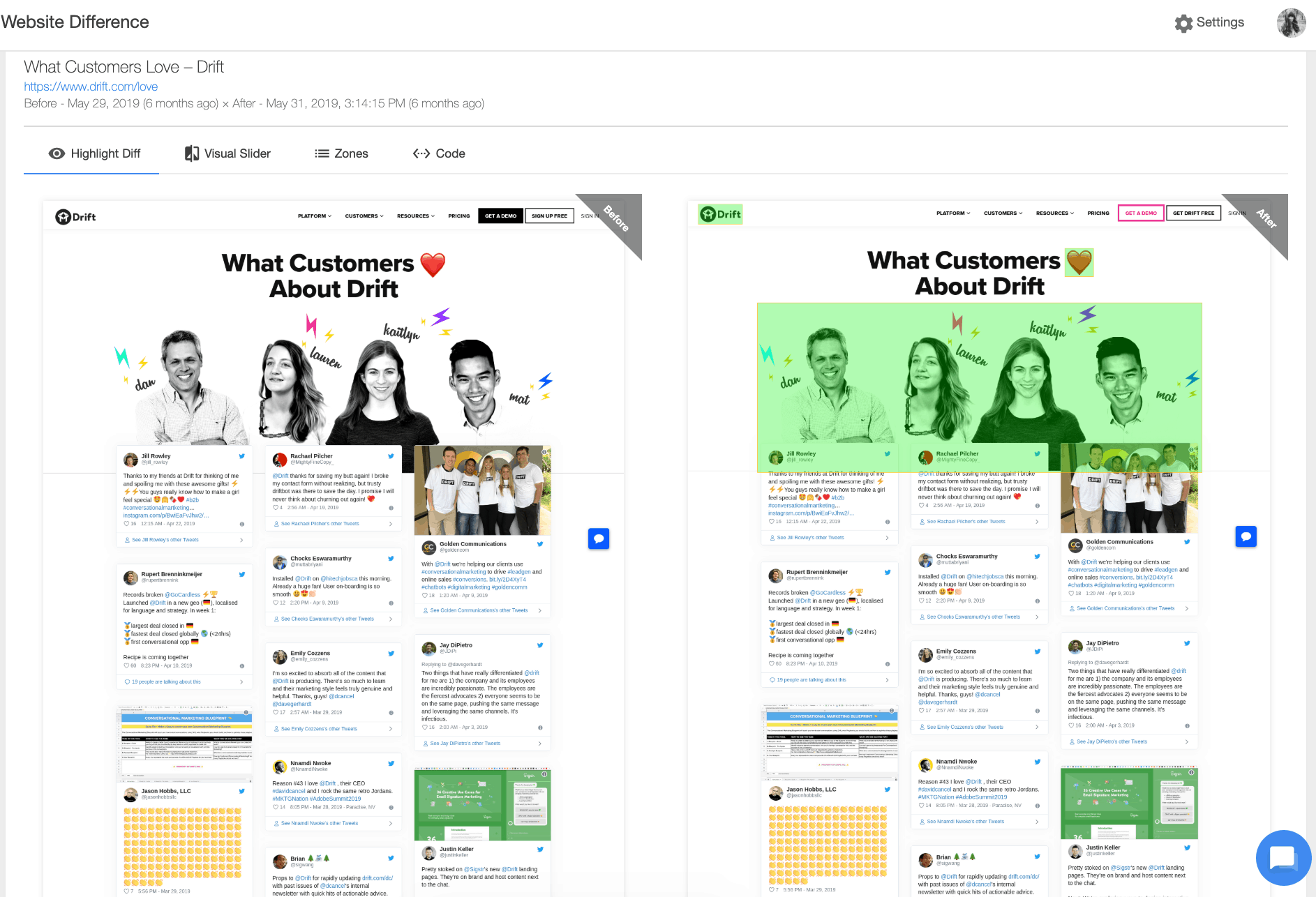
When it comes to a website, there are many ways to increase visibility and gain attention from around the web. Drift dedicated a page with Marketing Case Studies of companies that used them successfully.
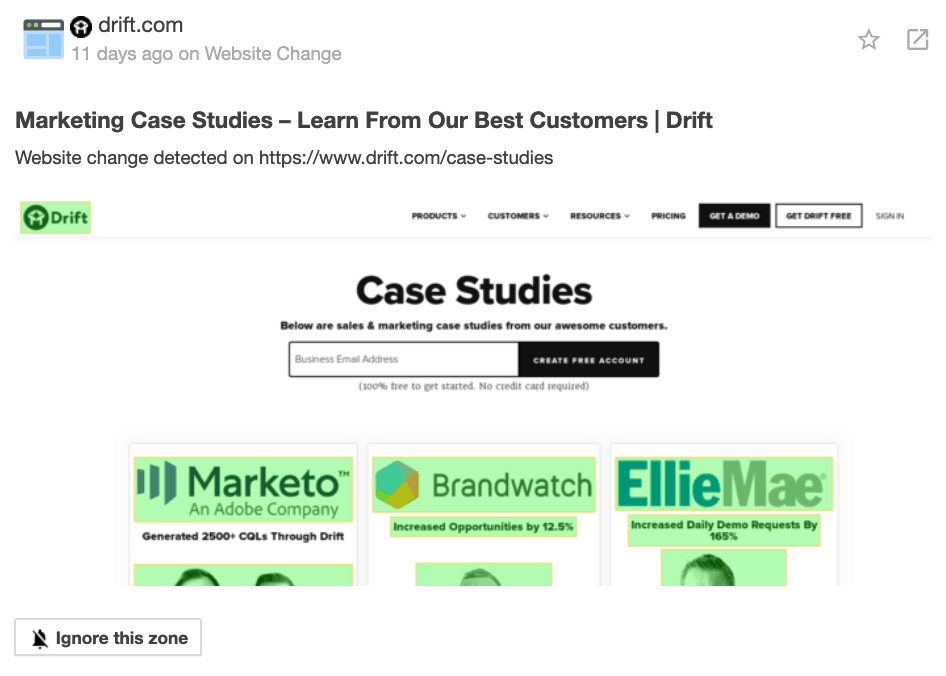
Takeaway: Listing on your website reviews from happy and satisfied users/customers will bring value to your product or service and build brand trust among readers and future customers. Don’t forget that customer reviews are one of the most powerful tools available to online businesses – they help eliminate doubts and can dramatically boost conversions.
Intercom focuses on its free trial offer
Another website detail that caught my attention was from Intercoms’ website. The company changed the item’s order on the pricing page, focusing on the “Try for free” CTA button, instead of the price, as it used to be before the change.
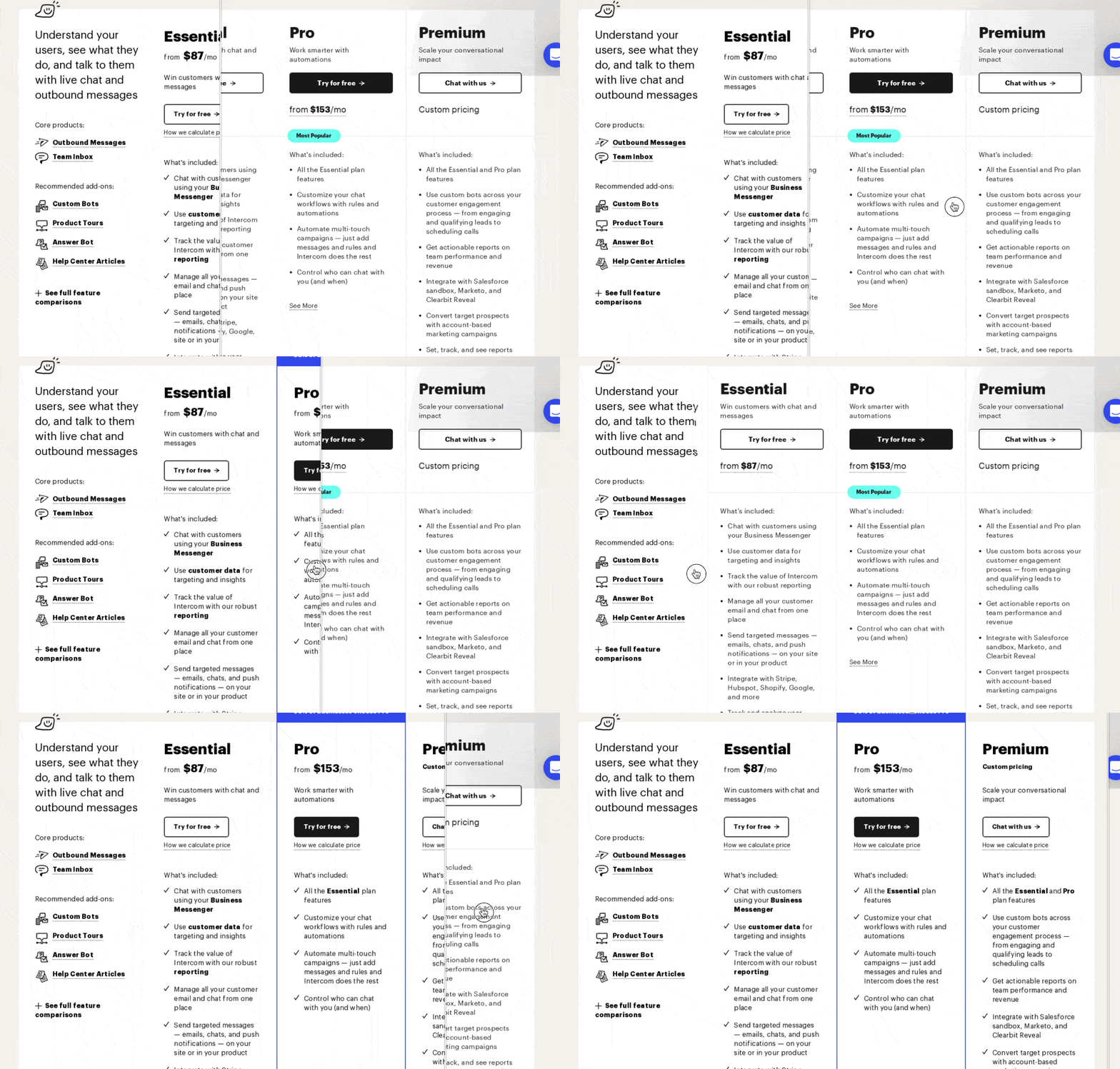
Keeping an eye on certain brands’ or competitors’ websites and gathering data can provide you with valuable insights on their current focus, but also future steps. Intercom, Drift, and Zendesk focus on users, and customer experience, underlining the value of each service and allowing the possible customer to figure out the value of the product before transforming it into a customer.
After seeing some top examples of how Intercom, Drift, and Zendesk differentiate their websites, let’s focus on their Social Media channels and have a look at their content.
Intercom vs. Drift vs. Zendesk on Social Media
There’s not a secret anymore – competitors’ content marketing strategies can give you hints or directions on what/when/where you should post. If you are continually gathering competitors’ data and analyzing it, more than 70% of your content marketing strategies can be done by simply watching what your competitors are doing or not on their marketing channels.
What content is publishing Intercom, Drift, and Zendesk on Social Media?
Having an inside look at Intercom, Drift, and Zendesk’s content marketing strategies allows us to make an idea of how those companies consolidate the relationship with their targeted audience, existing, and possible users.
Being customer-focused, creating value, and educate the audience are the main characteristics when it comes to Intercom, Drift, and Zendesk content. Also, they succeed in building a familiar and personal feeling around their messages, wrapping the content simply and straightforwardly way.
Let’s dive deeper and see some examples.
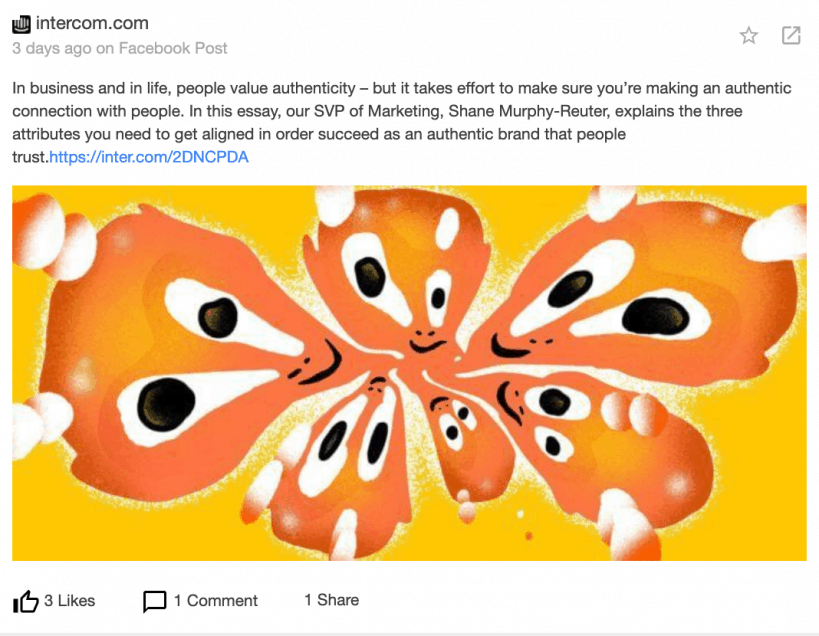

For sure, on a daily bases, you see on your Facebook feed, on average, more 50 posts from friends, brands, and more. It’s hard to notice each one of them and harder to reminder at least two after a couple of hours.
Intercom, in the examples above, is introducing its announcement in a general and broader context by underlining statements with which people can relate immediately. They emphasize that creating content for Social Media is not about continually “selling” or “pitching” for your product or service but creating value around it, creating the idea that your product or service it’s the solution for a specific problem, and helping others to succeed.
Plus, being authentic and creating a recognizable visual identity will always help – Intercom visual content is always colorful, playful, meaningful, and easy to spot.
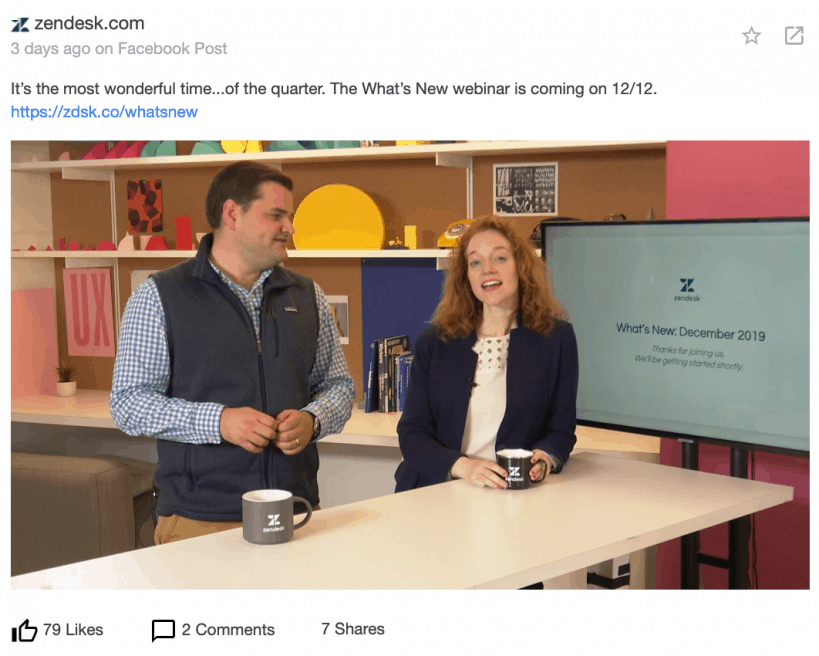
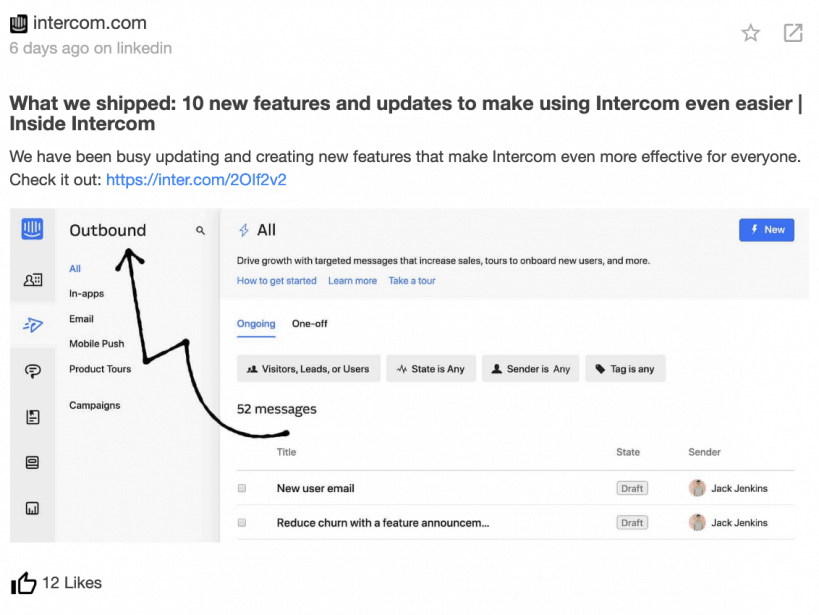
We all know that Intercom, Drift, and Zendesk are regularly organizing webinars, podcasts, and educational content for the audience, right? When it comes to delivering the message, the brands are choosing quite different ways of announcing the events of Social Media, especially from a visual point of view.
Those differences are characteristics of each brand’s identity on social media. For example, Zendesk, as seen above, has a “raw” way of delivering content using in the majority of the time unedited pictures with team members, creating some personal connection with the viewers.
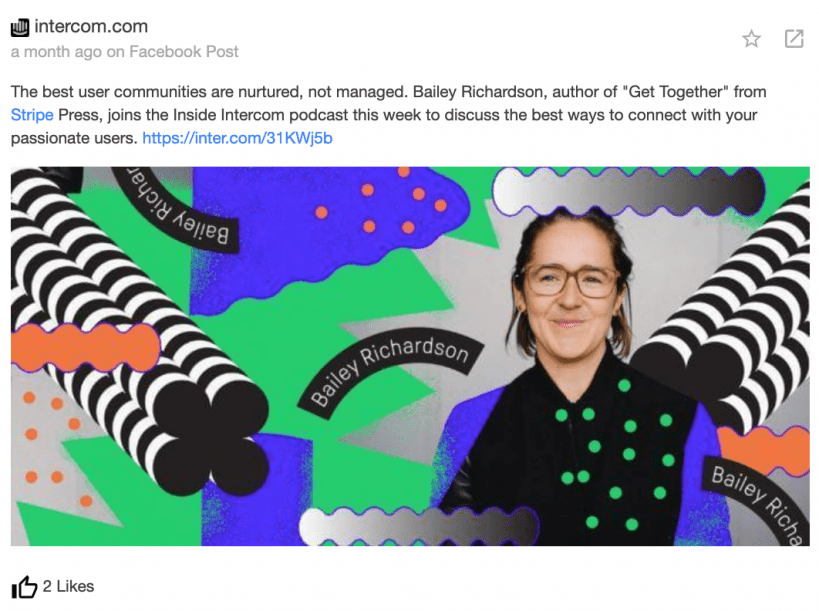
On the other hand, as already mentioned above, Intercom has created an authentic visual image around the brand, a graphic, and a colorful way of showing the story of each post.
Taking about showing the “raw” image of the brand, Drift, and Zendesk have a more personal approach when it comes to content on Facebook and Instagram. Drift shares pictures of the team’s members in their spare time, but also team members’ babies, in this way building a sense of community and a personal connection – like sharing something with a family member, or a friend, or a neighbor – I’m sure you got it.

Also, Drift gives a personal touch of each writing, especially on Facebook. The majority of posts are signed by “Jackie”. Moreover, analyzing all Facebook posts gathered automatically on the Competitors App’s timeline, I’ve noticed that Drift is using the most emojis and hashtags.
As personal as Drift, Zendesk shares team member’s pets, anniversary posts, and cakes, and Halloween masks, and cookies again, and … almost everything that deserves attention.
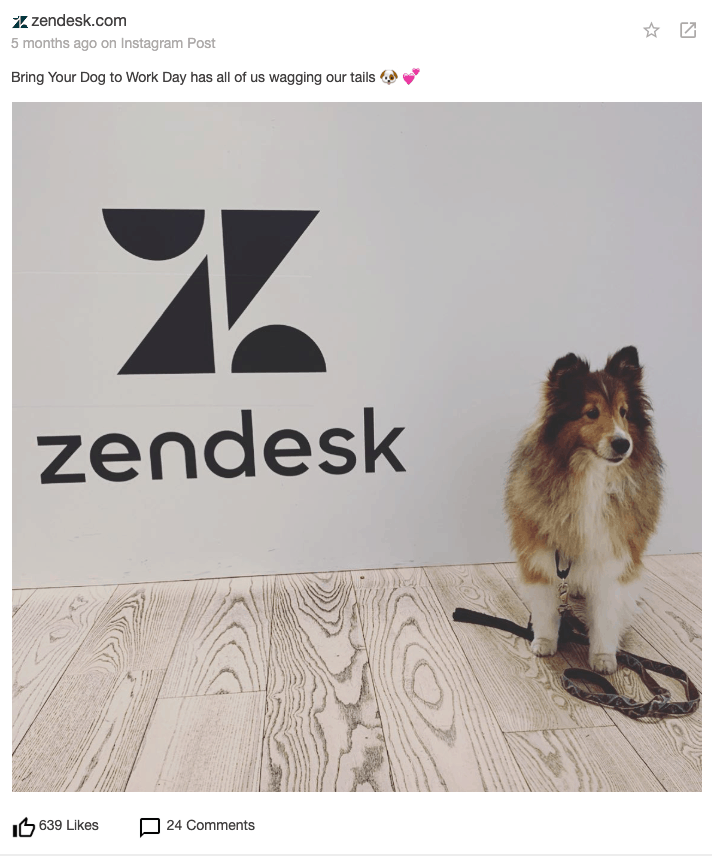

Of course, each brand has a different approach according to the used channel. On Facebook and Instagram, the brands are delivering more relaxed and personal posts, as on Twitter, YouTube, and LinkedIn, a more informal type of content.
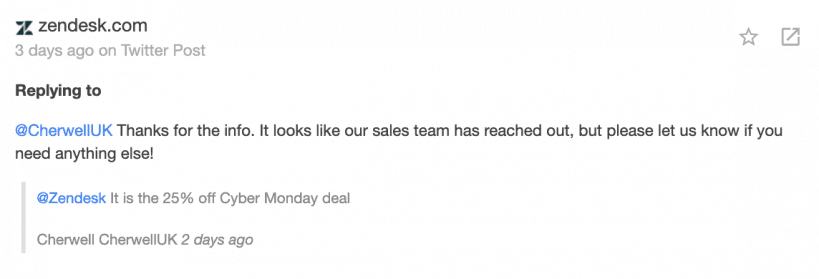
Also, when it comes to Twitter, this seems to be the most used channel to connect directly with users/clients. Zendesk it’s quite active on Twitter, answering user’s questions through re-tweets and making sure everybody using their service is happy.
Now that we’ve made an idea of what type of content is Intercom, Drift, and Zendesk posting on different Social Media channels, let’s analyze the gathered data and see some numbers.
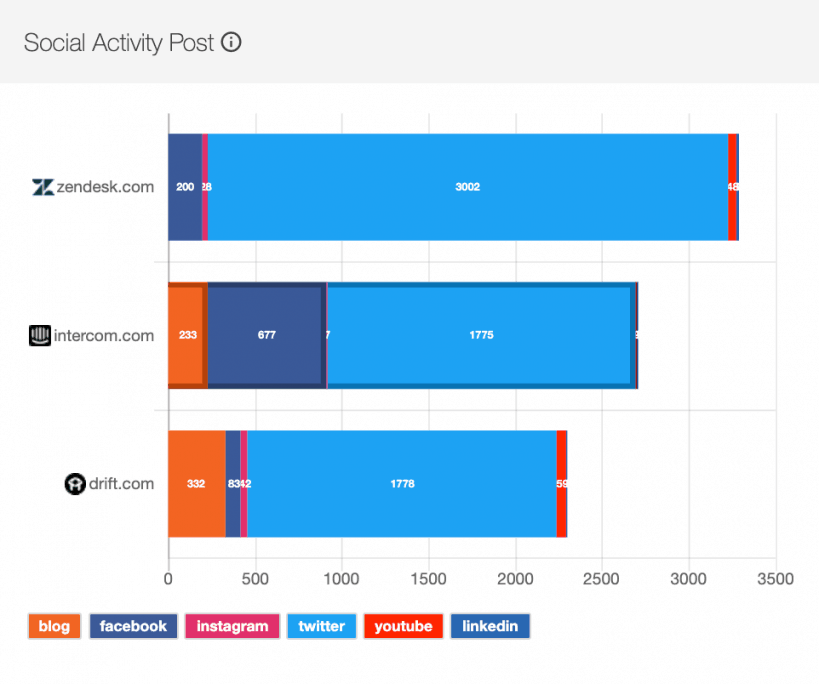
As noticed from the graphic, the most-used channel for Intercom, Drift, and Zendesk is Twitter. With more than 3000 Twitter posts during one year, Zendesk is the most active brand on this particular channel. On the other side, Intercom has a more significant number of Facebook posts than his competitors, Zendesk, and Drift.
Let’s take a closer look into engagement details and see on which Social Media channel has Intercom, Drift, and Zendesk reached a higher engagement.
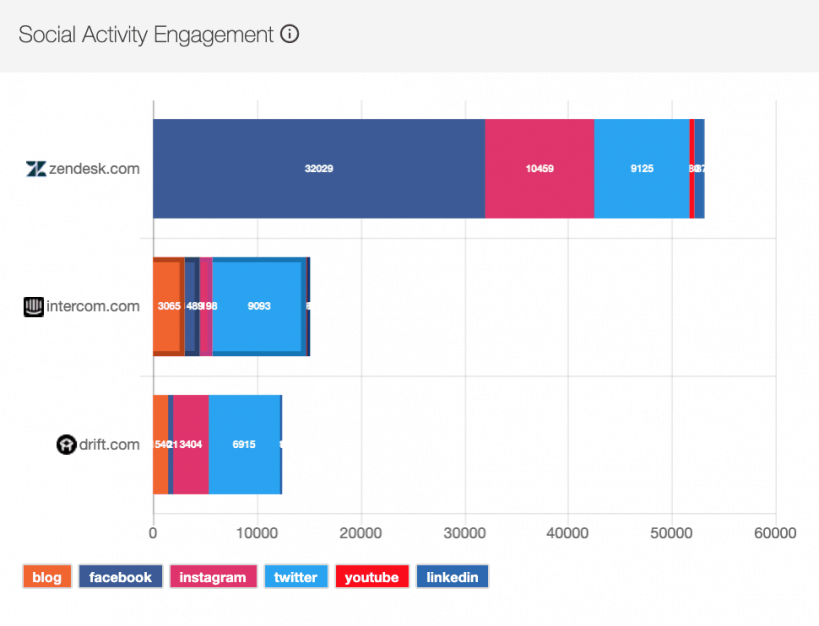
As seen above, Zendesk had reached higher engagement during the last year. The company’s engagement on Facebook is 20 times bigger than Intercom engagement, and 76 bigger than Drift’s Facebook engagement. Of course, to have a realistic perspective over those graphics, we should not forget to take into account Intercom, Drift, and Zendesk’s estimated Social media followers from those channels.
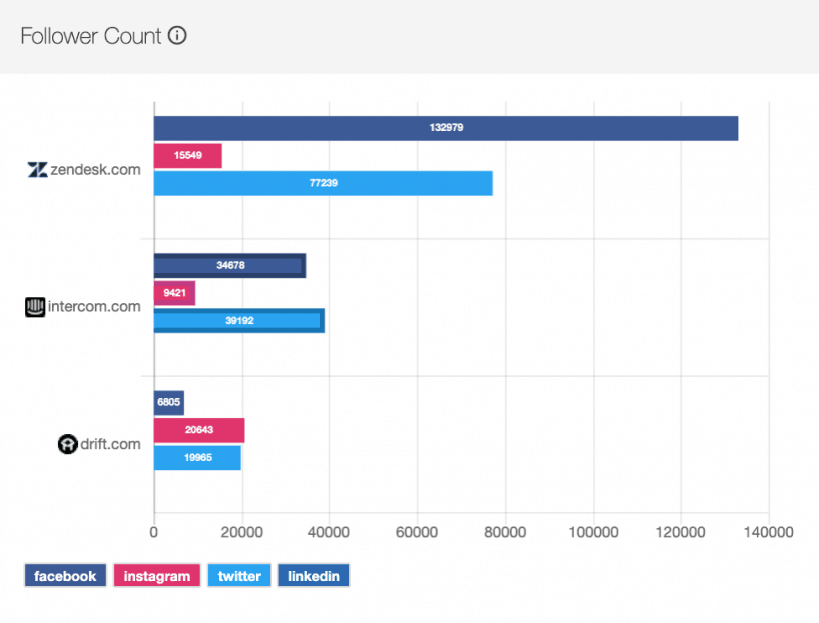
It’s clear to notice that Zendesk has a bigger number of social followers on Facebook and Twitter and bigger changes to get more appreciation from its audience than Drift, for example. To understand how Zendesk is getting its engagement numbers, let’s dive deeper into the most popular two posts from the last 12 months.
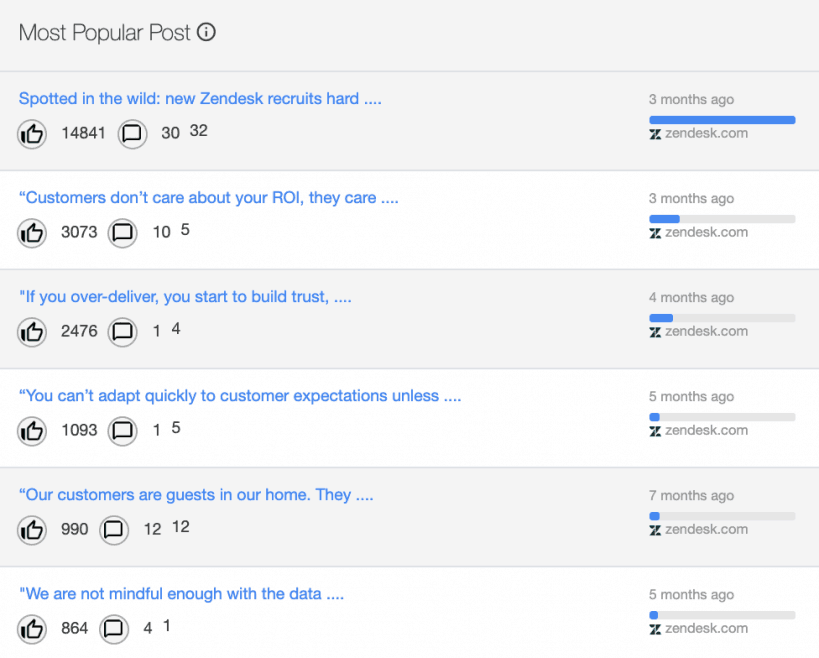
This top is automatically generated, taking into account Intercom, Drift, and Zendesk engagement data during the last year. As noticed, Zendesk has pretty much-earned everything in terms of viral posts. The most popular post has, for sure, a hard to beat engagement score.
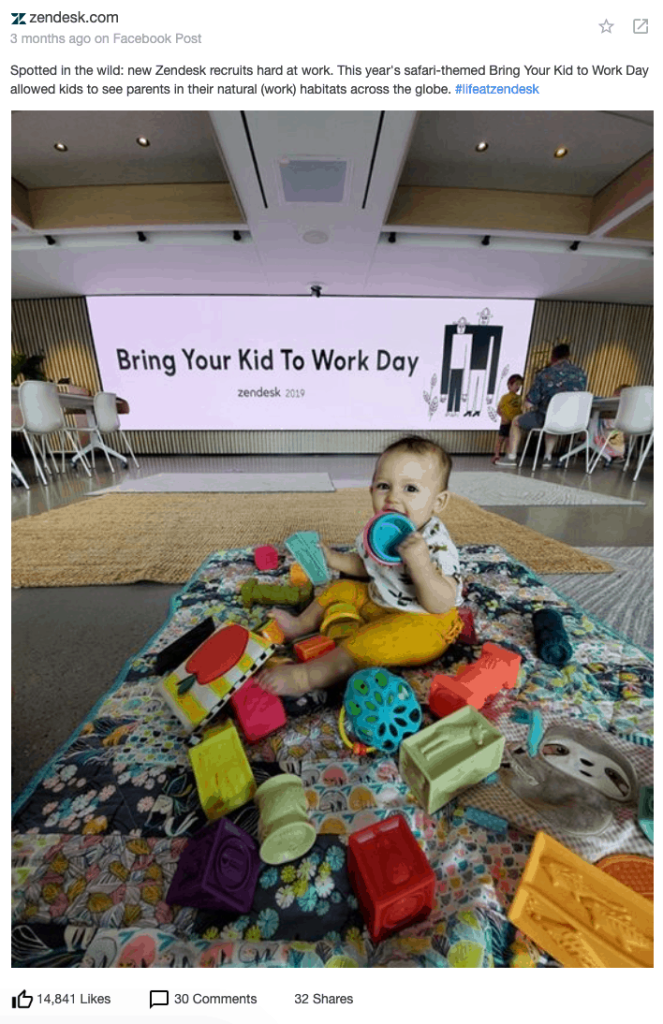
Zendesk boosted their engagement from a 30-50 rate to 15K by posting candid pictures with Zendesk’s team members’ babies during a “Bring Your Kid to Work Day”. More than 32 shares, over 30 comments with “Sweet”; “Nice” and more than 300 “Love” reactions to the album.
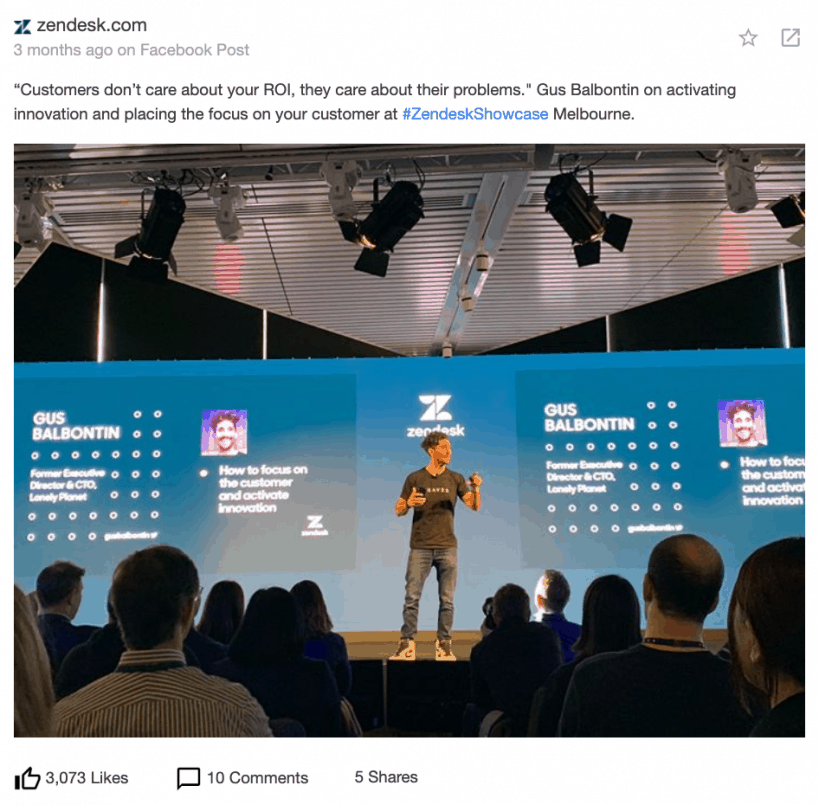
The second most viral post it’s a picture from a Zendesk event hosted in Melbourne. The post has 3000 online appreciations and a powerful catchphrase that resumes entire articles – quite simple, right?
Takeaway: Use images to tell stories quickly and powerfully and get more exposure in the news feed. Plus, children, happy faces, dynamic images look good all the time and are always a safe bet for your Social Media image posts.
Intercom vs. Drift vs. Zendesk on Emails
What Newsletters are sending Intercom, Drift, and Zendesk?
Intercom, Drift, and Zendesk newsletter highlights trending topics in customer support, product management, and startups.
Analyzing closer Drift and Intercom emails sent last month, I’ve spotted one particular email that sparked my interest. Let’s have a closer look at it.
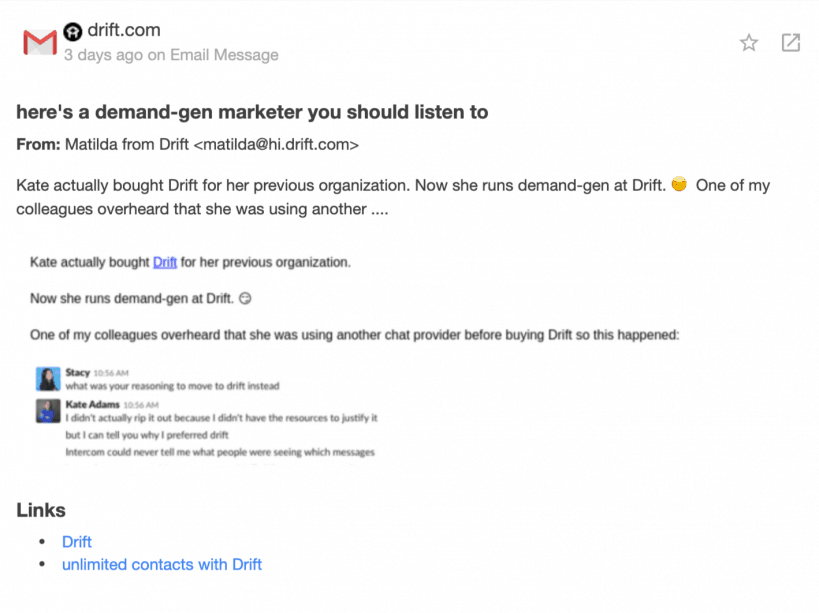
Did you spot Intercom mention in Drift’s newsletter? The newsletter, send by Drift to its users, it features a conversation between a Drift member and a recent customer that has chosen to use Drift because Intercom did not satisfy her expectations. Smart move? Excellent marketing strategy – definitely, a reason to keep an eye on your competitors’ newsletters to spot these kinds of situations that put you in a bad light in front of a big community.
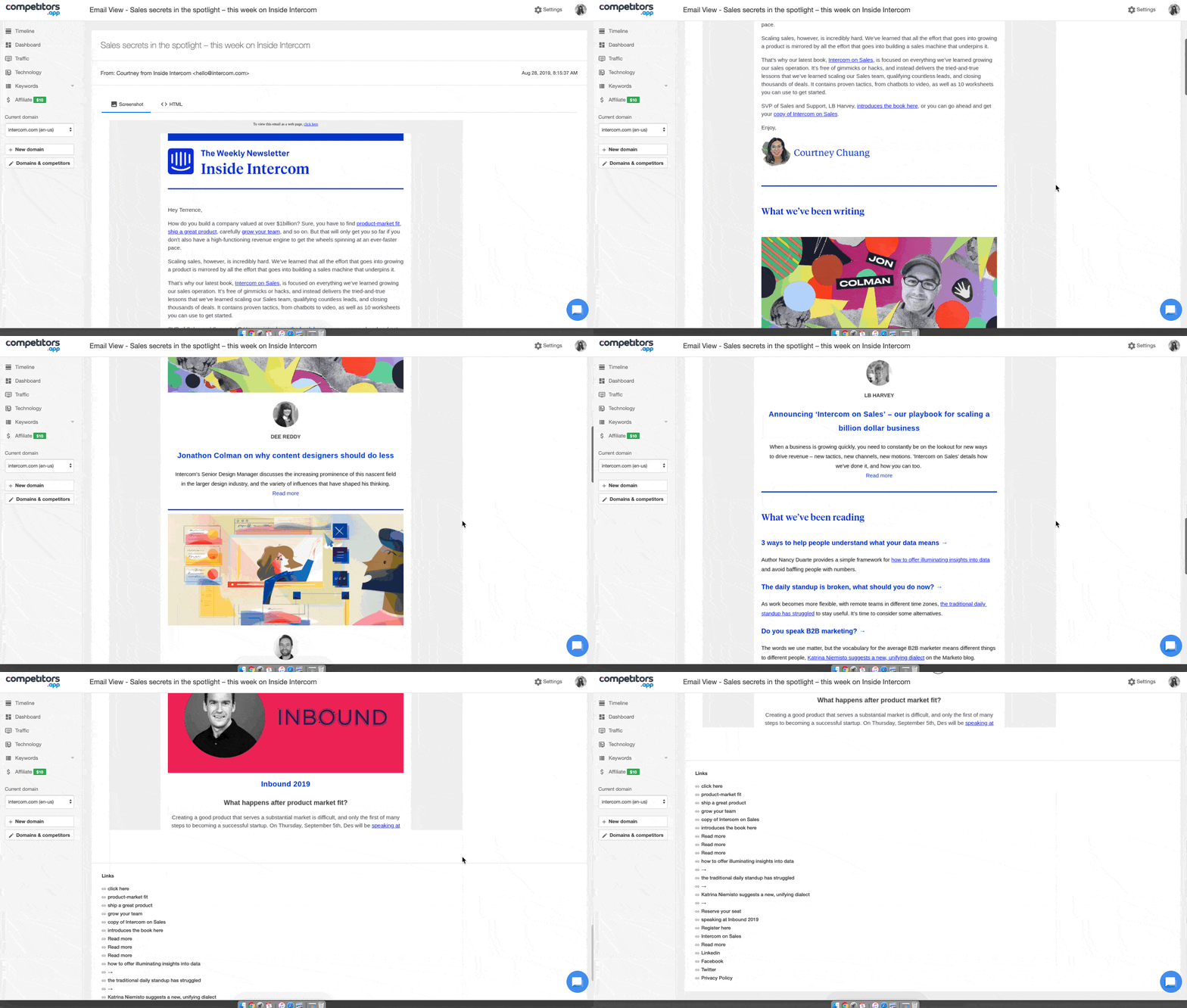
When it comes to Intercom newsletters, the team focuses on creating and delivering pieces of content to educate their customers, help them to succeed and develop on their professional path. With each weekly newsletter, Intercom is launching an issue from business and life context and comes up with the solution, gathered in an article/video/guide. Intercom emails are, without doubts, a source of knowledge, inspiration, and a trusted source of information.
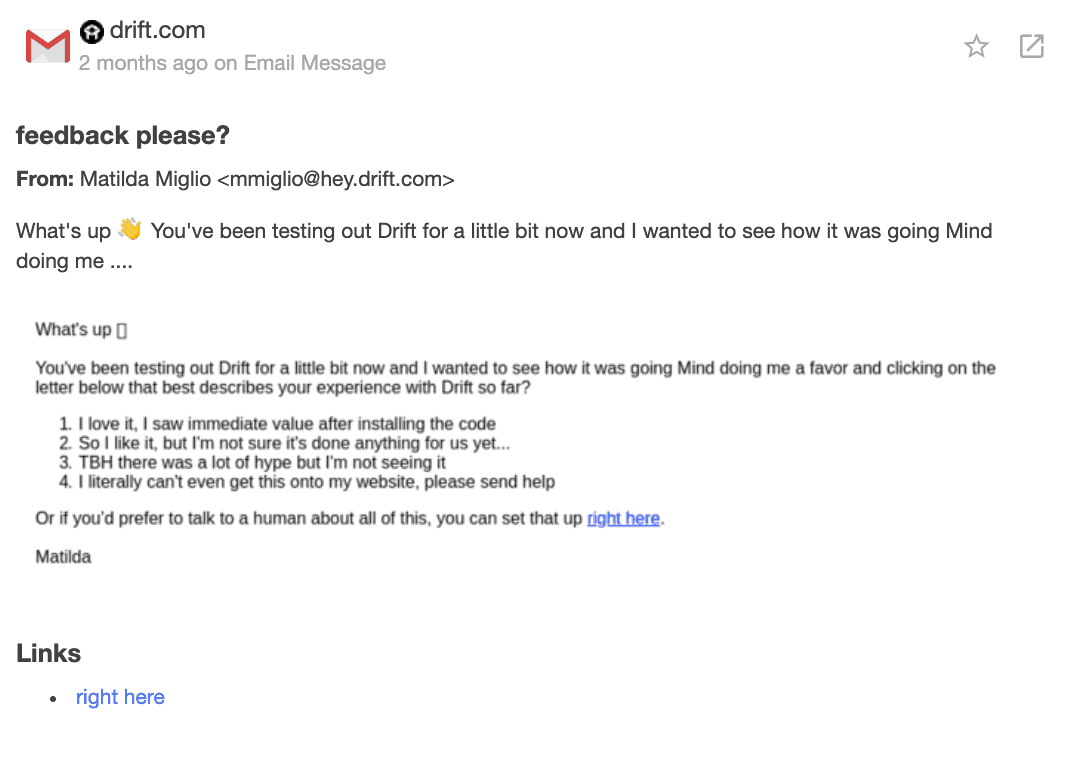
With an average of four emails per month, Drift has a different approach, in a more conversational way, asking for users’ feedback in a, not at all pretentious vocabulary.
When it comes to Zendesk’s Newsletters, the team sends links to webinars and delivers content to help users better use their product and gain knowledge from people from the industry.
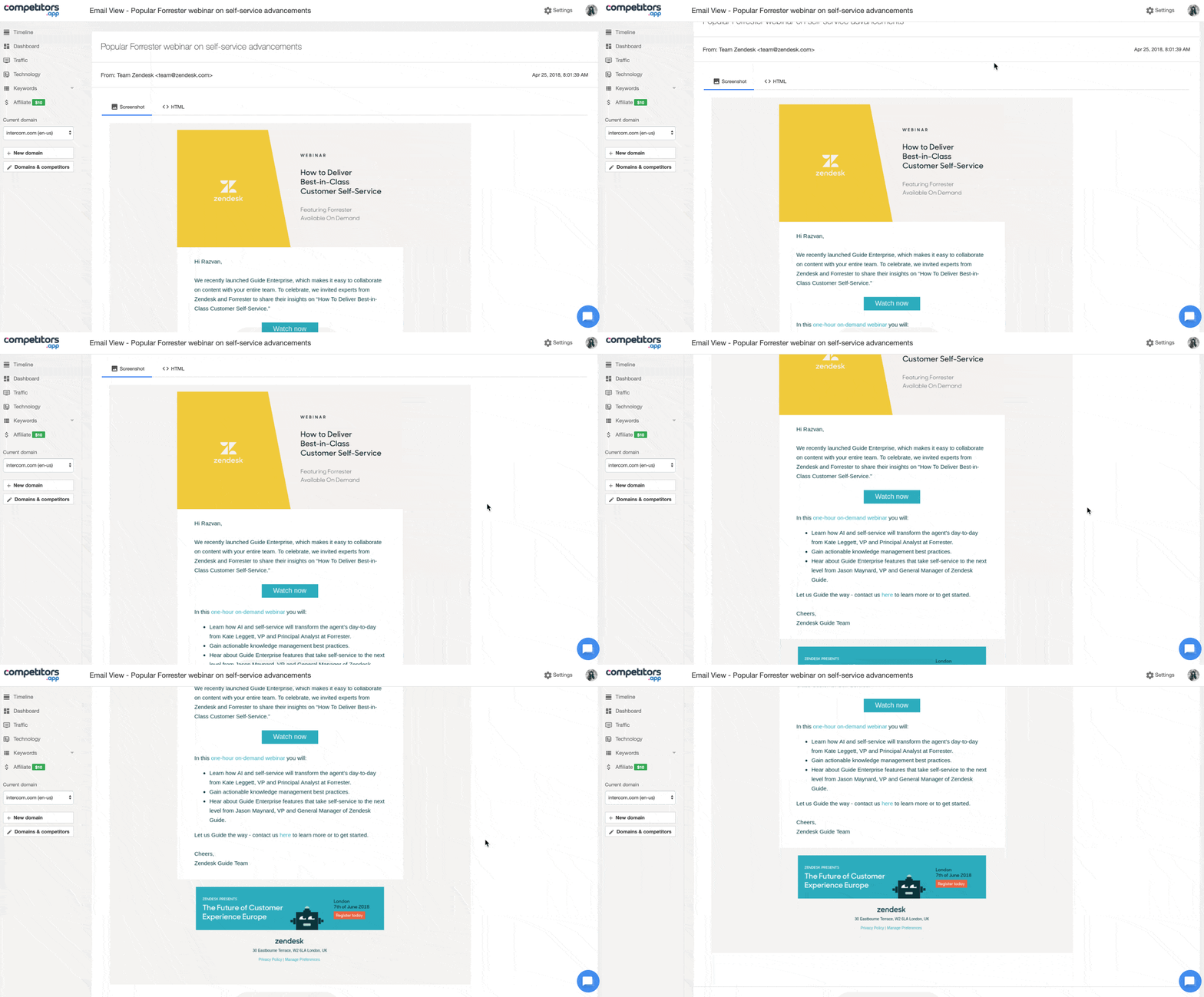
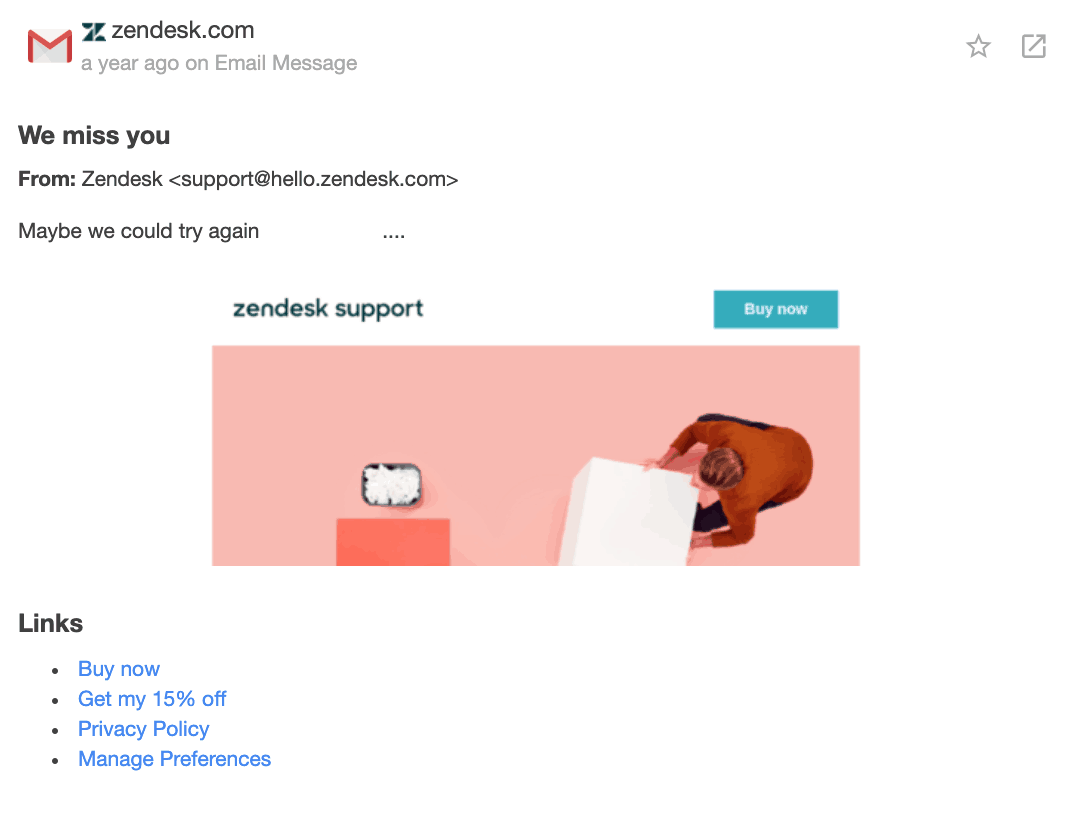
At the same time, Zendesk keeps its main characteristic when it comes to crafting messages: being natural, friendly, and developing a personal connexion.
As we could see, Intercom, Drift, and Zendesk’s messaging and style are quite different in terms of tone, approach, and visual content. With a significant impact on the market’s industry, each of those three brands has created a strong and unique image in front of the audience and its’ customers, and they tailored their approach based on their targeted public, business objectives, and brand image.
Keeping an eye on competitors’ actions on different channels will allow marketers/CEOs/business owners to make the right decisions to differentiate their brand and to build an authentic online identity, easy to recognize. Also, watching close competitors’ marketing activities will underline how could you improve your strategies, based on competitors’ data and results.