Introduction to BigCommerce vs. Webflow: A Comparison of Website Builders
When it comes to building an online presence, BigCommerce and Webflow emerge as two popular website builder tools, each tailored for different market needs. BigCommerce focuses on e-commerce solutions, empowering users to create robust online stores with advanced selling features. Conversely, Webflow positions itself as a design-oriented platform, enabling users to craft custom websites without extensive coding knowledge, making it popular among designers and agencies.
Users often consider BigCommerce for its comprehensive e-commerce functionalities, such as multi-channel selling and payment processing, while Webflow attracts those looking for creative flexibility, dynamic design capabilities, and a powerful content management system.
To aid users in choosing between the two, this comparison explores key aspects: features, pricing, ease of use, design flexibility, and e-commerce capabilities. By examining these factors, users can determine which platform aligns best with their specific needs.
BigCommerce VS Webflow: Which tool is the most popular?
| Tool | Number of Reviews | Average Rating | Positive Reviews | Neutral Reviews | Negative Reviews |
|---|---|---|---|---|---|
| BigCommerce | 94 | 3.22 | 58 | 4 | 32 |
| Webflow | 31 | 2.61 | 13 | 0 | 18 |
BigCommerce emerges as the most popular tool with a significantly higher number of reviews (94) compared to Webflow (31). It also holds a better average rating of 3.22, indicating a more favorable reception among users. In contrast, Webflow has a lower average rating of 2.61, with a substantial proportion of negative reviews (18 out of 31), reflecting a less favorable perception.

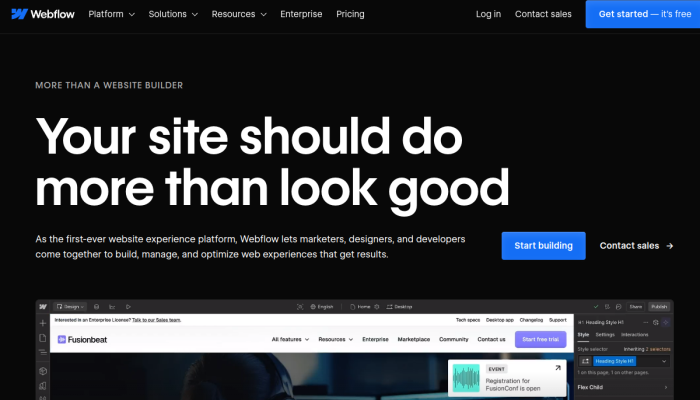
BigCommerce and Webflow: Quick Comparison Overview
| Feature | Ahrefs | SEMrush |
|---|---|---|
| Primary Features | – Site Explorer | – Domain Overview |
| – Keyword Explorer | – Keyword Research | |
| – Content Explorer | – Site Audit | |
| – Rank Tracker | – Backlink Analytics | |
| – Site Audit | – Social Media Tools | |
| – Clustering Tool | – Advertising Research | |
| – Backlink Checker | – Organic Research | |
| Target Audience | – SEO professionals | – Marketers & Advertising Specialists |
| – Content marketers | – Small to large businesses | |
| – Agencies | – E-commerce sites | |
| – Bloggers | – Content creators | |
| Main Advantages | – Rich backlink database | – Comprehensive all-in-one tool |
| – Strong focus on SEO tools | – Extensive keyword database | |
| – User-friendly interface | – Great competitor analysis | |
| – Excellent for site audits | – Versatile reporting features | |
| – Strong tracking capabilities | – Advanced PPC research | |
| Core Value Proposition | Detailed SEO analysis and backlink profile tracking, ideal for optimizing website visibility. | A complete digital marketing suite that covers SEO, PPC, and social media analytics for comprehensive strategy development. |
| Ideal Use Cases | – Analyzing competitor backlinks | – Running multi-channel digital marketing campaigns |
| – Finding keyword opportunities | – Tracking pay-per-click strategies | |
| – Performing in-depth site audits | – Monitoring social media performance | |
| – Crafting content strategies based on SEO data | – Conducting market research and analysis |
Most liked vs most disliked features of BigCommerce and Webflow
| Platform | Overall User Sentiment |
|---|---|
| BigCommerce | Most Liked Features: |
| – User-friendly, easy setup for non-technical users. | |
| – Highly praised technical support. | |
| – Strong customization options with API access and PageBuilder. | |
| – Versatile for B2B and B2C, handling various product types. | |
| – Robust functionalities like inventory management and mobile eCommerce. | |
| Most Disliked Features: | |
| – Minor limitations in managing configurable products requiring custom development. | |
| – Lacks features like geo-targeting and better third-party integrations. | |
| – Checkout process needs improvement for better conversion rates. | |
| – Desire for more transparency in order management notes. | |
| – Advanced features present a learning curve despite overall usability. | |
| Webflow | Most Liked Features: |
| – High level of customization for professional website creation. | |
| – Accessible and powerful for users with basic HTML/CSS knowledge. | |
| – Quick refund processes contribute to customer satisfaction. | |
| – Empowers non-developers and entrepreneurs to manage websites effectively. | |
| – Supports personal growth in web design careers. | |
| Most Disliked Features: | |
| – Steep learning curve makes it challenging for complete beginners. | |
| – Experiences of inadequate support when needed. | |
| – Some functionalities are too complex for novices. | |
| – Compared unfavorably to simpler platforms for certain users. | |
| – Concerns over pricing in relation to support and functionality provided. |
Key Features of BigCommerce vs Webflow
Key Features of BigCommerce and Webflow for Website Builder
BigCommerce
-
eCommerce Functionality
- Benefit: Designed primarily for online stores, BigCommerce offers robust features like inventory management, payment gateways, and shipping integrations. This allows businesses to manage their storefront efficiently and scale as needed.
- Unique Aspect: BigCommerce provides a wide range of built-in eCommerce tools without requiring third-party applications, making it easier for users to start selling online.
-
SEO Tools
- Benefit: Built-in SEO features such as customizable URLs, meta tags, and automatic XML sitemaps help users increase their visibility on search engines.
- Unique Aspect: BigCommerce emphasizes advanced SEO capabilities, which are particularly useful for larger businesses looking to improve search rankings.
-
Multi-Channel Selling
- Benefit: Supports selling on platforms like Amazon, eBay, and social media, enabling users to reach a wider audience.
- Unique Aspect: BigCommerce seamlessly integrates with multiple sales channels, including B2B features that cater specifically to wholesale sellers.
-
Responsive Themes
- Benefit: Offers a variety of mobile-optimized themes that enhance the shopping experience across devices.
- Unique Aspect: BigCommerce focuses heavily on eCommerce-specific design elements, ensuring that themes are tailored for conversions.
-
Analytics and Reporting
- Benefit: Provides comprehensive analytics tools to track sales performance, customer behavior, and marketing effectiveness.
- Unique Aspect: BigCommerce offers deep insights especially geared toward optimizing online sales strategies.
-
API Integrations
- Benefit: BigCommerce offers powerful API capabilities, which allow developers to build custom integrations and applications.
- Unique Aspect: The open API structure supports extensive flexibility in customizing and scaling a business’s online presence.
Webflow
-
Visual Design Interface
- Benefit: Webflow’s drag-and-drop interface allows users to design their websites visually, without needing to write code, making it accessible for designers and marketers.
- Unique Aspect: The design-first approach enables pixel-perfect customization, unlike traditional website builders that offer limited templates.
-
CMS Features
- Benefit: Users can build custom content structures without needing specialized knowledge, allowing for easy management of blogs and other content-rich sites.
- Unique Aspect: Webflow’s CMS is highly flexible, enabling users to create unique content types and rich media galleries tailored to their specific needs.
-
Responsive Design
- Benefit: Automatically adjusts design elements for various devices, ensuring an optimized user experience across different platforms.
- Unique Aspect: Webflow allows for detailed control over breakpoints, empowering designers to make specific adjustments for each screen size easily.
-
Ecommerce Capabilities
- Benefit: Users can create custom online stores with streamlined setups, including payment gateways and shopping cart functionalities.
- Unique Aspect: Webflow allows for a unique integration of eCommerce within a fully designed site, offering more creative freedom compared to traditional ecommerce builders.
-
Hosting and Security
- Benefit: Fast loading times and industry-standard security are included in the hosting service, enhancing site performance and user trust.
- Unique Aspect: Webflow’s hosting solution includes global Content Delivery Network (CDN) integration, further amplifying site speed and reliability.
-
Custom Code Capabilities
- Benefit: Users have the option to implement custom code (HTML, CSS, JavaScript), allowing for enhanced functionality and design.
- Unique Aspect: Webflow marries design and development capabilities, positioning itself as a powerful tool for advanced users who want more than basic functionalities.
Conclusion
Both BigCommerce and Webflow offer unique features that cater to different aspects of website building. BigCommerce excels in eCommerce functionalities with robust built-in tools ideal for online retail, while Webflow focuses on designer-friendly features that enable creative freedom and customization. Depending on the user’s needs—whether for a pure eCommerce platform or a creatively designed website with or without eCommerce functionality—each platform has valuable tools and features to offer.
BigCommerce vs Webflow Pricing Comparison
| Feature/Plan | BigCommerce | Webflow |
|---|---|---|
| Free Trial | 15-day free trial | 14-day free trial |
| Monthly Pricing | ||
| – Standard Plan | $29.95/month | $12/month (Basic) |
| – Plus Plan | $79.95/month | $16/month (CMS) |
| – Pro Plan | $299.95/month | $35/month (Business) |
| – Enterprise Plan | Custom pricing | Custom pricing |
| Annual Pricing | ||
| – Standard Plan | $299/year ($24.95/month) | $144/year ($12/month) |
| – Plus Plan | $949/year ($79.08/month) | $192/year ($16/month) |
| – Pro Plan | $3,188/year ($265.67/month) | $420/year ($35/month) |
| – Enterprise Plan | Custom pricing | Custom pricing |
| Main Features | ||
| – Standard Plan | Online store, responsive templates, | Drag-and-drop interface, basic CMS, |
| unlimited products, 24/7 support | hosting included, SSL security | |
| – Plus Plan | Everything in Standard + customer groups, | Everything in Basic + CMS capabilities, |
| abandoned cart saver | form submissions | |
| – Pro Plan | Everything in Plus + advanced analytics, | Everything in CMS + site search, |
| product filtering, API access | custom domain, more integrations | |
| – Enterprise Plan | Everything in Pro + advanced features, | Everything in Business + enhanced security, |
| custom SLAs, dedicated account management | priority support, site collaboration | |
| Discounts | None mentioned beyond annual pricing discount | 20% discount for annual subscriptions |
Summary of Key Differences:
- Pricing Structure: BigCommerce offers plans specifically tailored for eCommerce, while Webflow’s plans cater to bothCMS and design needs.
- Features: BigCommerce is focused on eCommerce features like abandoned cart saving and product filtering; Webflow provides more flexible design capabilities and CMS functionalities.
- Trial Duration: BigCommerce offers a longer free trial compared to Webflow.
- Annual Pricing Discounts: Both platforms offer lower monthly rates when paid annually, with Webflow providing a 20% discount specifically for annual plan users.
Support Options Comparison: BigCommerce vs Webflow
| Feature | BigCommerce | Webflow |
|---|---|---|
| Live Chat | Available during business hours; provides direct support for urgent inquiries. | Not available; users rely on other support options for assistance. |
| Phone Support | Available; customers can call for immediate assistance via dedicated support lines. | Not available; users must rely on online resources for help. |
| Documentation | Extensive knowledge base covering setup, troubleshooting, and best practices. | Comprehensive documentation available, including tutorials for various features and use cases. |
| Additional Resources | Offers webinars; also provides access to community forums and guides for further learning. | Features Webflow University, which includes video tutorials, courses, and community resources for skill enhancement. |
Unique Features of BigCommerce Vs Webflow
| Brand | Unique Features | Added Value | Decision Factor |
|---|---|---|---|
| BigCommerce | B2B eCommerce Features | Provides tools tailored for B2B operations, including bulk pricing, customer groups, and a robust quote management system. | Essential for businesses focusing on B2B sales, offering a seamless experience and specialized tools. |
| Multi-Currency Support | Allows businesses to sell in multiple currencies, enhancing the shopping experience for global customers. | Attracts international customers, reducing friction and increasing potential sales. | |
| Advanced SEO Features | Includes functionalities for product schema, custom URLs, and more, enhancing visibility on search engines. | Improves organic traffic potential, vital for online sales and visibility in a competitive market. | |
| Robust API Integration | Strong API capabilities that allow for extensive customization and integration with various third-party applications. | Enhances flexibility and scalability, crucial for businesses needing tailored solutions. | |
| No Transaction Fees | Allows businesses to keep more of their revenue by removing additional costs associated with online transactions. | Attractive for cost-sensitive businesses, maximizing profits on sales. | |
| Webflow | Visual Development Interface | Combines visual design with code capabilities, allowing for high customization without extensive coding knowledge. | Empowers designers to bring ideas to life with precision while minimizing coding requirements. |
| CMS Functionality | Offers a built-in CMS that allows for dynamic content creation and management, suitable for blogs and content-rich sites. | Streamlines content management for brands with extensive content needs, enhancing workflow efficiency. | |
| Responsive Design Tools | Provides extensive tools for responsive design, ensuring your site looks great on any device without additional CSS. | Essential in today’s mobile-first world, ensuring a consistent user experience across devices. | |
| Interactions and Animations | Enables the addition of complex animations and interactions to enhance user engagement, all without requiring JavaScript. | Increases user engagement and retention, making sites more interactive and visually appealing. | |
| Ecommerce Built-In | Facilitates the building of eCommerce sites with customizable payment options and easy integration of shopping carts. | Attracts businesses focused on selling products online without needing separate systems for eCommerce. |
The unique features of BigCommerce and Webflow provide significant advantages in their respective niches, making them compelling choices for businesses seeking specialized functionality, customization, or improved user experience. These distinct offerings can be deciding factors, especially for companies with specific operational needs or a desire to create a unique online presence.