
Majestic vs. Ahrefs
Majestic and Ahrefs are popular SEO tools, but they serve different priorities. Majestic focuses mainly on backlink analysis, helping users examine link profiles and evaluate website authority. Ahrefs offers a broader SEO toolkit, including keyword research, backlink analysis, competitor research, and site auditing.
Users often compare them when choosing tools to build link strategies, find keyword opportunities, or assess competitors. The right fit depends on the features you need, pricing, ease of use, and how much value you place on backlink data versus an all-in-one SEO workflow.
Majestic VS Ahrefs: Which tool is the most popular?
| Tool | Reviews | Average rating | Review sentiment | Popularity summary |
|---|---|---|---|---|
| Ahrefs | 336 | 2.32/5 | 101 positive, 23 neutral, 212 negative | Most reviewed, but has the lower average rating and more negative than positive reviews. |
| Majestic | 10 | 2.60/5 | 4 positive, 0 neutral, 6 negative | Least reviewed, but has the higher average rating of the two. |
Overall: Ahrefs is the most popular by review volume, while Majestic is the least reviewed. Majestic has a slightly higher average rating, though its rating is based on far fewer reviews.

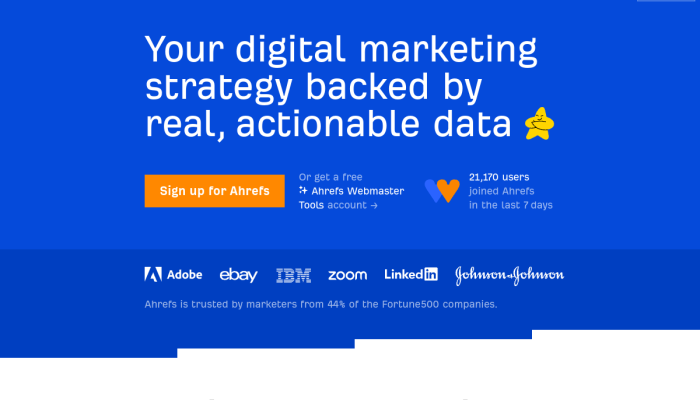
Majestic and Ahrefs: Quick Comparison Overview
| Category | Ahrefs | Semrush |
|---|---|---|
| Primary features | SEO research tools for backlink analysis, keyword research, site audits, rank tracking, and content research. | Broader digital-marketing suite covering SEO, competitor research, site audits, rank tracking, content marketing, local SEO, PPC, and social media. |
| Target audience | SEO specialists, content teams, and agencies focused on organic search and link building. | In-house marketing teams, agencies, and businesses managing several digital-marketing channels. |
| Main advantages | Strong backlink and competitor research, with a focused toolkit for finding SEO and content opportunities. | Wider range of marketing tools in one platform, especially useful for combining SEO with paid, local, and social campaigns. |
| Core value proposition | Make organic-search research and link-building workflows more effective. | Manage and measure a broader digital-marketing program from one platform. |
| Ideal use cases | Analyzing competitors’ backlinks, researching keywords and content gaps, auditing a site, and tracking organic rankings. | Coordinating SEO with PPC, local visibility, content, and social efforts; conducting cross-channel competitor research. |
Sources: Ahrefs features · Semrush features
Feature availability varies by plan and may change.
Most liked vs most disliked features of Majestic and Ahrefs
| Brand | Positive sentiment | Main concerns | Overall sentiment |
|---|---|---|---|
| Majestic | Customers praise product quality, including audio and visual experiences, and describe customer service as professional, helpful, and fast. The product range also meets varied needs. | Complaints include unfulfilled refund commitments, display visibility issues in some radios, and crawling compatibility problems with WordPress-hosted sites. | Mixed: Positive product and service experiences are offset by concerns about refunds and specific product or compatibility issues. |
| Ahrefs | Users value its user-friendly interface, backlink analysis, keyword research, competitor insights, SEO reporting, and content improvement tools. | Common drawbacks are high cost, limited detail in broken-link analysis, a learning curve for beginners, limited report customization, and gaps in regional data availability. | Generally positive, with reservations: Users find it powerful and useful for SEO, but some consider it expensive and want more guidance, flexibility, and regional coverage. |
Key Features of Majestic vs Ahrefs
Majestic
Majestic is primarily a backlink and link-intelligence platform. Its SEO value comes mainly from showing who links to a site, how those links are connected, and what topics they relate to.
| Feature | How it benefits users |
|---|---|
| Site Explorer and backlink reports | Explore a domain or URL’s backlink profile, including referring sites and links. This helps users assess link-building progress, investigate competitors, and spot potentially useful or problematic links. |
| Fresh and Historic indexes | Compare recently discovered links with a longer-term view of link history. This helps users track changes and understand whether a site’s backlink profile is growing or has changed over time. |
| Trust Flow and Citation Flow | Majestic’s link metrics help users evaluate link quality and link volume separately. They can be used to compare sites or prioritize links for further investigation. |
| Topical Trust Flow | Shows the topical categories associated with a site’s links, helping users assess whether its backlink profile appears relevant to its subject area. |
| Link Context | Adds information about the page and surrounding content where a link appears. This gives users more context than a simple list of backlinks. |
| Clique Hunter | Finds sites that link to multiple competitors but not to the user’s site. This can reveal potential link prospects. |
| Keyword-related tools | Majestic offers ways to investigate keywords and their relationship to search results and link data. These can support research, though Majestic is less of an all-in-one keyword-planning suite than Ahrefs. |
What’s distinctive about Majestic: Its specialist focus on link intelligence, especially Trust Flow, Citation Flow, Topical Trust Flow, and its Fresh and Historic link indexes. It is particularly useful when backlink analysis is the main task.
Source: Majestic
Ahrefs
Ahrefs offers a broader SEO toolkit, combining backlink analysis with keyword research, competitor research, rank tracking, and site auditing.
| Feature | How it benefits users |
|---|---|
| Keywords Explorer | Research keywords using metrics such as search volume, keyword difficulty, and click estimates, along with keyword ideas and SERP information. This helps users judge opportunities and plan content. |
| Site Explorer | Analyze a site’s backlinks and organic search performance, including the keywords it ranks for. Users can research competitors and find potential content or link opportunities. |
| Content Gap | Compare a site with competitors to find keywords they rank for that the site does not. This helps create a prioritized list of topics to target. |
| Content Explorer | Discover content on a topic and examine its performance, such as search traffic and links. It can help users find content ideas and study successful pages. |
| Rank Tracker | Monitor keyword rankings over time and compare performance with competitors, helping users measure SEO progress. |
| Site Audit | Crawl a site to identify technical and on-page SEO issues. This helps users find problems that could affect crawling, indexing, or page quality. |
| Link Intersect | Find websites that link to competitors but not to the user’s site, supporting link-prospecting efforts. |
What’s distinctive about Ahrefs: It brings keyword research, backlink analysis, competitor discovery, content research, rank tracking, and technical auditing into one connected suite. Its unique-features article highlights capabilities across that broader toolkit.
Source: Ahrefs: Unique Features
In short
- Choose Majestic when detailed backlink and link-quality analysis is the priority.
- Choose Ahrefs when you want keyword research and competitor analysis alongside backlink, content, rank-tracking, and site-audit tools.
Majestic vs Ahrefs Pricing Comparison
Prices are in USD. Annual rates are the monthly equivalent when billed for a year; taxes and regional pricing may differ.
| Brand and tier | Monthly subscription | Annual subscription | Main differences in offerings |
|---|---|---|---|
| Majestic — Lite | $49.99/month | $41.67/month, billed annually ($499.99/year) | Entry plan for individual SEO work. Includes Majestic’s backlink research tools, such as Site Explorer, Fresh Index data and Link Context, with lower usage and reporting limits than higher plans. |
| Majestic — Pro | $99.99/month | $83.33/month, billed annually ($999.99/year) | Adds higher research and reporting limits and access to more advanced backlink-analysis features, including Historic Index data and tools such as Clique Hunter. Suited to heavier research and ongoing campaign work. |
| Majestic — API | $399.99/month | $333.33/month, billed annually ($3,999.99/year) | Includes API access and substantially higher usage allowances. Intended for teams and businesses that need to integrate Majestic data into their own tools or workflows. |
| Ahrefs — Starter | $29/month | Annual price not listed | Low-cost, limited-access plan for basic use. Includes access to Ahrefs’ core SEO tools with tighter usage limits than Lite and above. |
| Ahrefs — Lite | $129/month | $108/month, billed annually ($1,296/year) | For small businesses and individual site owners. Raises project, keyword-tracking and research allowances compared with Starter. |
| Ahrefs — Standard | $249/month | $208/month, billed annually ($2,496/year) | Adds larger allowances and more extensive historical and reporting access than Lite. Better suited to regular SEO work across multiple projects. |
| Ahrefs — Advanced | $449/month | $374/month, billed annually ($4,488/year) | Increases project, keyword-tracking and data allowances again, with additional capabilities for larger or more complex SEO operations. |
| Ahrefs — Enterprise | $1,499/month | $1,249/month, billed annually ($14,988/year) | Ahrefs’ highest standard tier, aimed at larger organizations. Adds enterprise-oriented access and administration options, with higher limits and features such as API access and single sign-on. |
| Pricing detail | Majestic | Ahrefs |
|---|---|---|
| Annual-billing savings | Annual billing works out to two months free compared with paying monthly. | Annual billing is about 17% less than monthly pricing—also equivalent to two months free—for plans with annual pricing. |
| Free access or trial | A limited free account is available; the pricing page does not advertise a free trial of the paid plans. | Ahrefs Webmaster Tools and other free tools provide limited access; the pricing page does not advertise a general free trial of the paid plans. |
Ahrefs’ plans are organized around its broader SEO toolkit and scale by usage, projects and access needs. Majestic’s plans focus more specifically on backlink data, with its API tier serving data integrations. The prices and included limits are listed on the Majestic pricing page and Ahrefs pricing page.
Support Options Comparison: Majestic vs Ahrefs
| Support option | Majestic | Ahrefs |
|---|---|---|
| Live chat | The support page does not list live chat as a support channel. | The Help Center offers a way to contact the support team through chat. |
| Phone support | No phone-support option is shown on the linked support page. | No phone-support option is shown in the linked Help Center. |
| Documentation | The page points users to support information and help resources for using Majestic. | The Help Center provides a searchable library of articles covering Ahrefs products, features, and account questions. |
| Tutorials and other resources | Majestic provides learning resources alongside its support information; the linked page does not highlight webinars as a main support channel. | Ahrefs supplements its help articles with learning materials such as tutorials and Academy content. These are useful for learning the tools beyond resolving support issues. |
| Overall | Support is presented mainly through written help and contact routes; live chat and phone support are not listed on the page. | Ahrefs offers a more visible self-service help library and a chat contact option; phone support is not listed. |
Unique Features of Majestic Vs Ahrefs
| Brand | Uncommon feature | Added value and why it may decide the choice |
|---|---|---|
| Majestic | Trust Flow and Citation Flow — separate scores for the quality-oriented strength of a link profile and the volume of links pointing to it. | Helps distinguish a site with many links from one with links from sources Majestic considers more trustworthy. Useful when evaluating link prospects or monitoring link quality, rather than relying on backlink counts alone. |
| Majestic | Topical Trust Flow — shows the subject areas associated with a site’s backlink profile. | Adds a relevance lens to link evaluation: a link source may be strong overall but less useful if its topic is unrelated. This can matter when choosing outreach targets or assessing whether a backlink profile fits a site’s subject. |
| Majestic | Link Context — provides information about a backlink’s surrounding page context and link placement. | Makes it easier to judge how a link appears in context, rather than treating every backlink as an equivalent entry in a list. A deciding factor for teams that manually qualify links. |
| Majestic | Clique Hunter — identifies sites linking to several competitors, helping reveal link prospects a target site may not have. | Turns competitor backlink comparisons into a more focused prospecting list. It can save time when link building is a priority. |
| Majestic | Historic backlink data — lets users examine link profiles over time, not just their current state. | Helps investigate link growth or loss and understand how a site’s backlink profile has changed. This is valuable for long-term analysis and diagnosing sudden shifts. |
| Ahrefs | Content Explorer — searches for content on a topic and lets users filter pages using performance and link-related metrics. | Helps find content that has already attracted attention or links, making it useful for topic research, content planning, and prospect discovery—not just keyword selection. |
| Ahrefs | Keywords Explorer click data — includes measures such as estimated clicks and clicks per search, alongside search-volume data. | Search volume does not show whether searchers actually click a result. These measures can help prioritize terms with more realistic traffic potential, which may change which keywords a team targets. |
| Ahrefs | Site Explorer — combines a site’s backlink analysis with organic-search information, including ranking keywords and estimated traffic. | Lets users investigate competitors’ links and search visibility in one workflow. That combination can be a deciding factor for teams doing both backlink research and organic competitor analysis. |
| Ahrefs | Content Gap — identifies keywords that competing sites rank for but the analyzed site does not. | Converts competitor research into a list of potential coverage opportunities. It is especially useful when a team wants to find missing topics rather than start keyword research from scratch. |
These features are uncommon as a combination, not necessarily exclusive to either brand. Majestic’s strongest distinction is its link-focused metrics and context; Ahrefs’ is the integration of keyword, content, competitor, and backlink research.

