
Jasper vs. Clay: A Quick Comparison
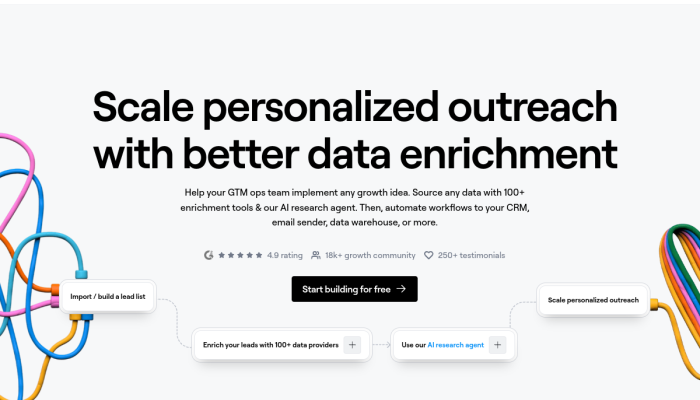
Jasper is an AI platform for creating and managing marketing content, while Clay helps sales and marketing teams find, enrich, and organize B2B prospect data. They serve different purposes, but users may compare them when choosing tools to support B2B growth.
The right fit depends on your needs: Jasper is geared toward content production; Clay is built for prospecting and data workflows. Compare their features, pricing, ease of use, integrations, and how well each fits your team’s processes.
Jasper VS Clay: Which tool is the most popular?
| Tool | Reviews | Average rating | Popularity assessment |
|---|---|---|---|
| Jasper | 27 | 3.19/5 | Most popular: it has more reviews and a higher average rating. |
| Clay | 12 | 1.92/5 | Least popular: it has fewer reviews and a lower average rating. |

Jasper and Clay: Quick Comparison Overview
| Brand | Primary features | Target audience | Main advantages | Core value proposition | Ideal use cases |
|---|---|---|---|---|---|
| Ahrefs | Backlink and competitor research, keyword research, site audits, rank tracking, and content research | SEO specialists, content teams, agencies, and businesses focused on organic search | Strong backlink-analysis and competitor-research workflows; useful for finding link opportunities and content gaps | A focused SEO toolkit for understanding search competition and growing organic traffic | Auditing a site’s SEO, researching competitors’ links and keywords, planning content, and monitoring rankings |
| Semrush | SEO research and audits, keyword and backlink analysis, plus tools for PPC, content marketing, social media, and competitive research | In-house marketing teams, agencies, and businesses managing several digital-marketing channels | Broader marketing coverage; brings SEO, paid-search, and other campaign research into one platform | A broad digital-marketing platform for researching competitors and managing multiple marketing workflows | Coordinating SEO and PPC research, running site audits, planning campaigns, and reviewing competitors across channels |
Feature availability varies by plan. Sources: Ahrefs · Semrush
Most liked vs most disliked features of Jasper and Clay
| Product | Overall sentiment | What users liked | What users disliked |
|---|---|---|---|
| Jasper | Generally positive, especially for speeding up marketing and writing workflows, though users often need to refine its output. | Quickly produces first drafts; integrates with other tools; has an accessible interface; supports marketing work; and can write in different brand voices. | Content can feel generic or lack authenticity, and quality may vary. Outputs often need editing to match a brand’s voice. Some users also find setup cumbersome and the features difficult to learn at first. |
| Clay | Mixed to negative, with satisfaction when orders arrive but notable concerns about reliability and delays. | Customers valued delivery tracking and responsive communication. Those who received their orders were satisfied with product quality. | Reports of non-delivery and unanswered inquiries undermined trust. Long waits—sometimes weeks or months—also frustrated customers. |
Key Features of Jasper vs Clay
Jasper vs. Clay for B2B database workflows
They serve different roles: Jasper is an AI marketing platform, not a B2B contact or company database. Clay helps teams find, enrich, and work with B2B prospect and company data.
| Brand | Key features | How they benefit users | What’s distinctive |
|---|---|---|---|
| Jasper | Brand-aware AI content creation using brand context such as voice, style, and company knowledge. | Helps marketers create consistent content—such as campaign copy, emails, and landing-page text—without starting from scratch each time. | Focuses on keeping AI-generated marketing content aligned with a company’s brand, rather than supplying prospect records. |
| Campaign and marketing workflows for producing and adapting content across channels. | Lets teams turn campaign ideas or audience insights into coordinated content more efficiently. | Built around marketing content workflows, so it can complement a B2B database but doesn’t replace one. | |
| Clay | B2B prospecting and data enrichment using multiple data sources. | Helps teams find missing details and build more complete company or contact records for targeting and outreach. | Its enrichment approach can draw on multiple providers, rather than relying on a single data source. |
| Research and personalization using AI to analyze prospects and company information. | Reduces manual research and helps teams tailor outreach to specific accounts or contacts. | Combines data work and AI-assisted research in a flexible, table-based workflow. | |
| Workflow automation and integrations for moving data into sales and marketing processes. | Cuts repetitive list-building tasks and helps keep prospecting workflows connected to tools such as a CRM. | Works more like a configurable data-workflow layer than a simple, static contact directory. |
In short: Choose Clay to build, enrich, and activate B2B prospect data. Choose Jasper to create brand-consistent marketing content that can use insights from that data. They can be complementary, but they are not direct substitutes.
Sources: Jasper Solutions · Clay
Jasper vs Clay Pricing Comparison
| Brand and tier | Monthly billing | Annual billing | Main differences in offerings |
|---|---|---|---|
| Jasper — Pro | $69 per seat/month | $59 per seat/month when billed annually | Self-serve plan for individuals and small teams. Includes Jasper’s AI content tools, Brand Voice, Knowledge, Audiences, and campaign features. |
| Jasper — Business | Custom | Custom | Custom-priced plan for larger teams, with expanded collaboration, governance, and support options. Contact Jasper for a quote. |
| Clay — Free | $0 | $0 | Free plan with limited monthly data credits and table capacity; useful for trying Clay’s prospecting and enrichment workflows. |
| Clay — Starter | $149/month | About $134/month when billed annually | Entry paid plan with a larger monthly credit allowance and more capacity for tables and workflows than Free. |
| Clay — Explorer | $349/month | About $314/month when billed annually | Higher credit and table limits, suited to more frequent prospecting and enrichment. |
| Clay — Pro | $800/month | About $720/month when billed annually | Larger-scale usage, with substantially higher credit limits and expanded capacity for teams and workflows. |
| Clay — Enterprise | Custom | Custom | Custom limits and terms for larger organizations; contact Clay for pricing. |
| Pricing detail | Jasper | Clay |
|---|---|---|
| Annual-billing discount | Pro is $10 less per seat per month than month-to-month billing—about 14% off. | Annual rates are approximately 10% lower than monthly billing for the listed paid tiers. |
| Trial or free access | Jasper advertises a 7-day free trial for Pro. | Clay offers a free tier; the listed pricing does not require a paid-plan trial. |
| Important pricing note | Business pricing is quote-based. | Credit allowances and plan limits affect how much enrichment and workflow activity each tier supports; confirm current limits and annual totals on Clay’s pricing page. |
Jasper pricing: jasper.ai/pricing
Clay pricing: clay.com/pricing
Support Options Comparison: Jasper vs Clay
| Support option | Jasper | Clay |
|---|---|---|
| Live chat | The Jasper Help Center offers a chat-based way to contact support. The page does not specify chat hours or response times. | The Clay Help Center provides a chat/contact option for support. It does not specify hours or response times. |
| Phone support | No phone-support option is listed on the Help Center. | No phone-support option is listed on the Help Center. |
| Documentation | A searchable Help Center with articles and guidance for using Jasper. | A searchable Help Center with product guides and step-by-step documentation. |
| Webinars and tutorials | Jasper also offers learning resources, including tutorials and webinar-style content, alongside its help articles. | Clay offers learning resources such as tutorials and webinars to help users learn the product and its workflows. |
Overall: Both services direct users to chat and online documentation rather than phone support. Their learning materials provide additional self-serve help; neither Help Center specifies support hours or response-time commitments.
Unique Features of Jasper Vs Clay
| Brand | Features uncommon in a conventional B2B database | Added value and why they may decide |
|---|---|---|
| Jasper | Brand-specific AI using brand voice and company knowledge. Jasper can use a company’s guidance and knowledge to shape the content it generates. | Helps teams produce content that is more consistent with their brand, rather than just finding contacts or company records. This may matter when many marketers need to create on-brand material at scale. |
| Jasper | Marketing content and campaign creation. Jasper is built to help teams draft and adapt content for marketing use cases, rather than simply supply prospect data. | Reduces the work of turning a marketing brief into usable copy across channels. It may be a deciding factor for teams whose main bottleneck is content production, not lead discovery. |
| Jasper | Reusable workflows and custom AI tools. Jasper’s platform supports repeatable marketing processes and custom tools for team tasks. | Teams can standardize recurring work instead of relying on one-off prompts or manual handoffs. This is valuable when consistency, throughput, and shared processes matter. |
| Clay | Waterfall data enrichment across providers. Clay can check multiple data sources to find or fill in missing details. | Improves the completeness of prospect records without requiring teams to depend on a single database. This can be decisive when coverage or data quality is a persistent problem. |
| Clay | Claygent, an AI research agent. It can research information from the web and return findings against specified questions. | Adds context that may not exist in standard contact records—for example, details useful for account research or qualification. This helps teams prioritize and personalize outreach. |
| Clay | Automated data workflows and CRM updates. Clay can combine sourcing, enrichment, research, and downstream actions in workflows, including syncing information with connected systems. | Cuts repetitive prospecting and data-maintenance work, and helps keep records usable as they change. It may be a deciding factor for teams that want to operationalize data, not just export a list. |
Jasper’s distinction is marketing content creation and brand consistency; Clay’s is flexible research, enrichment, and data workflows. Neither is simply a conventional B2B database: Jasper addresses the content-production gap, while Clay addresses the gaps between finding, improving, and acting on prospect data.
Sources: Jasper Solutions · Clay

